From Overwhelmed to Organized: How Online Certifications Quietly Transformed My Daily Life
Ever feel like you’re juggling too many tasks, learning new skills in chaos, and never quite proving what you know? I did too—until I discovered how online skill certifications, paired with simple organization habits, quietly reshaped my days. It wasn’t flashy, but it made me more confident, efficient, and in control. This is not about perfection. It’s about progress—real, quiet, and deeply personal. I wasn’t looking for a revolution. I just wanted to stop feeling like I was always one step behind, especially when it came to learning new things and showing what I could actually do. The truth is, we’re all learning all the time—watching videos, reading articles, listening to podcasts—but so often, it doesn’t stick, and we can’t point to anything concrete. That changed when I started treating learning like something worth organizing, not just squeezing in between laundry and grocery lists.
The Morning Chaos That Sparked a Change
My mornings used to be a blur of noise and motion. I’d wake up late, rush to make breakfast, check my phone for urgent messages, and then dive into emails before I’d even had coffee. By 9 a.m., I felt behind—like I’d already lost the day. And in the middle of all that, there was this nagging voice: Did I finish that course module? Was I supposed to submit something? What was I even trying to learn again? I had half-dozen online courses open across different platforms—some on time management, others on basic web design, a few about personal finance. But I wasn’t finishing them. I wasn’t even sure what I’d picked up from them. They were just floating in my browser history like digital ghosts.
Then came the moment that changed everything. I applied for a role at a local nonprofit I really cared about—one that involved managing their volunteer database and helping with outreach. I knew I had the skills. I’d helped organize events, handled spreadsheets for my book club, and even built a simple sign-up form for my daughter’s school fundraiser. But when they asked for proof of training or relevant experience, I had nothing solid to show. I mentioned the courses I’d started, but it didn’t land. They went with someone else—someone who could point to completed certifications and clear learning paths. I wasn’t angry, just disappointed in myself. I realized I wasn’t failing because I didn’t try. I was failing because I didn’t finish. And I wasn’t organizing my learning like I organized everything else in my life—my calendar, my grocery list, my family’s schedules. Why not treat growth the same way?
Why Learning Feels Scattered—And How Certifications Help
We’re surrounded by information. A quick search pulls up hundreds of videos on how to use Excel, blog posts about budgeting, tutorials on photo editing. But here’s the thing: consuming isn’t the same as learning. And learning isn’t the same as proving you’ve learned. I used to think, Oh, I watched a few videos on Google Sheets. I’ve got this. But when I had to build a real budget for a community project, I froze. I couldn’t remember the formulas. I didn’t know where to start. The knowledge was there somewhere, but it was scattered, like puzzle pieces with no picture to guide me.
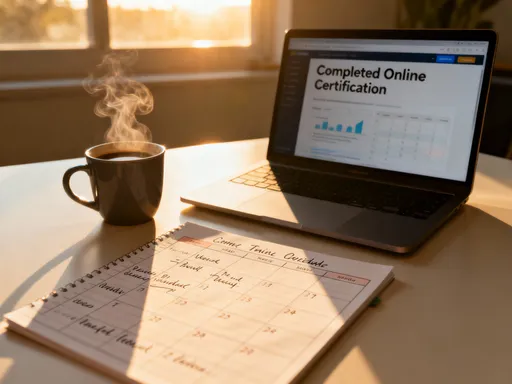
That’s where online certifications made the difference. They gave me a structure—something clear and step-by-step. Instead of just watching, I was doing. Instead of passively scrolling, I was completing assignments, taking quizzes, and applying what I’d learned. And at the end? I got a certificate. Not a trophy, not a bragging right—but a real marker that said, You did this. You know this. It wasn’t about impressing anyone. It was about trusting myself. When I could say, “I completed a certification in digital organization,” it meant something. I wasn’t guessing. I wasn’t hoping. I knew. And that changed how I showed up in meetings, how I volunteered, how I helped my family with tech issues. The certification wasn’t magic. But it was proof. And proof builds confidence.
Building a Personal Learning Dashboard (Without Tech Stress)
I’ll be honest—I’m not a tech expert. I don’t love complicated tools or apps that need constant updating. So when I started thinking about organizing my learning, I didn’t jump into fancy software. I started with something simple: a folder on my laptop. I named it “Skills in Progress” and made subfolders for each course—“Digital Organization,” “Budget Basics,” “Intro to Web Tools.” In each one, I saved my notes, screenshots of progress, and eventually, the certificate when I finished.
It wasn’t glamorous, but it worked. Every time I opened that folder, I could see what I was working on and how far I’d come. It made my learning feel real, not just something floating in the cloud. Later, I moved to a free digital planner—something that synced across my phone, tablet, and laptop. I set up a section just for learning: course name, start date, weekly goals, completion date. The tool wasn’t the magic. The routine was. Every Sunday evening, while my family watched a movie, I spent 20 minutes reviewing my learning dashboard. What had I done this week? What was next? Why did this matter to me? That small habit—just 20 minutes a week—kept me on track. It wasn’t about being perfect. It was about being consistent. And consistency, I’ve learned, is where real growth happens.
Making Time When You Have None
I hear it all the time—“I’d love to learn, but I don’t have time.” I used to say that too. Between work, family, and everything else, it felt impossible. But then I started thinking differently. I didn’t need two-hour blocks of quiet study time. I needed small moments—what I now call “gap time.” That 15 minutes while dinner is in the oven. The quiet stretch after the kids go to bed. The time I used to spend scrolling social media before falling asleep.
I found online courses that were built for this—short modules, mobile-friendly, easy to pause and restart. Instead of watching random videos, I picked one section a day. Ten minutes here, 12 minutes there. And I tracked it. Not with pressure, but with care. When I finished a module, I’d check it off in my planner. That small act—marking progress—felt like a win. It wasn’t about rushing to finish. It was about showing up, even in tiny ways. Over time, those minutes added up. A course I thought would take months? I finished in six weeks. And because I’d broken it into small steps, it never felt overwhelming. I wasn’t squeezing learning into my life. I was weaving it in—like a thread, not a burden.
Sharing Growth With People Who Matter
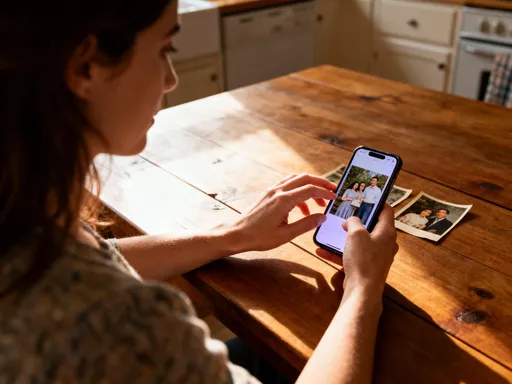
One weekend, I printed out my first digital certificate—a course on managing online calendars and task lists. I didn’t frame it for the wall. I put it on my desk, where I could see it. A few days later, my sister came over. She spotted it and said, “Wait, you did this? That’s awesome.” I shrugged and said, “Yeah, it was just a little thing.” But inside, I felt proud. It wasn’t about her approval. It was about the moment I realized: I did this. And someone noticed.
Later that week, she texted me: “How do I start something like that?” That surprised me. I didn’t think anyone was watching. But they were. My kids saw me studying. My friends noticed when I stopped saying, “I’m bad with tech.” Even my mom asked me to help set up her email. Sharing my progress didn’t make me a show-off. It made me a role model—without even trying. I started telling stories at book club: “Remember how I used to miss appointments? Now I use this system.” I showed my nephew how I built a simple website for my garden club. He said, “Auntie’s learning coding? Cool.” Those moments reminded me that growth isn’t just for me. It ripples out. It inspires others. And sometimes, the quietest changes make the loudest impact.
From Isolated Learning to Everyday Confidence
Here’s what no one tells you: certifications don’t just live on your laptop. They change how you move through the world. I used to stay quiet in meetings, afraid I’d say something wrong. But after completing a course on data basics, I spoke up when we were reviewing volunteer numbers. I suggested a simple chart to make the data clearer. My manager said, “That’s a great idea.” I didn’t say, “I have a certification in this.” I didn’t need to. I just knew I could do it.
That quiet confidence spilled into other areas. When my neighbor wanted to start a small business selling handmade soaps, I offered to help with her website. I wasn’t an expert, but I’d learned enough through my web tools course to set up a simple page, add photos, and create a contact form. She was thrilled. And I realized: learning wasn’t just about me getting ahead. It was about me being able to give back. I wasn’t just gaining skills. I was gaining the courage to use them. That shift—from “I might fail” to “I can try”—was everything. It wasn’t loud. It wasn’t dramatic. But it was real. And it changed how I saw myself—not as someone who was always catching up, but as someone who was capable, growing, and making a difference.
A System That Grows With You—Not Against You
The best part of this journey? It didn’t end when I finished a course. It evolved. When I decided to shift from part-time admin work to supporting small nonprofits with digital tools, I didn’t start from scratch. I looked back at my learning dashboard. I had certificates in communication tools, budgeting, and website basics. I combined those into a simple portfolio—just a few pages showing what I’d learned and how I’d used it. That helped me land a consulting role with a local group. No re-inventing the wheel. Just building on what I’d already done.
Life changes. Responsibilities shift. But a good system adapts with you. When I had more time, I took longer courses. When things got busy, I focused on 10-minute lessons. The structure stayed the same, but the pace adjusted. I wasn’t fighting against my schedule. I was working with it. And because I had a clear record of what I’d learned, I could always see how far I’d come—even on days when I felt stuck. That sense of progress, of forward motion, became its own kind of fuel. It wasn’t about being the smartest or the fastest. It was about being consistent, organized, and kind to myself. And that, I’ve learned, is how real change happens—not in big leaps, but in small, steady steps.
Small Steps, Lasting Shifts
Looking back, I didn’t set out to transform my life. I just wanted to feel more in control. I wanted to stop forgetting what I’d learned and start using it. What I discovered was that online certifications, when paired with simple organization, can do more than fill a resume. They can bring clarity to your days, confidence to your voice, and purpose to your growth. This wasn’t about becoming someone else. It was about becoming more of who I already was—someone who learns, adapts, and shows up.
You don’t need a big overhaul. You don’t need hours of free time or a tech genius mindset. You just need one small step—enrolling in a course, saving your notes, tracking your progress. Do it with care. Do it for yourself. Let that step become a habit, and that habit become a system. Over time, you’ll look back and realize something quiet but powerful: you’re not just busy. You’re moving forward. And every certification, every finished module, every moment you showed up—that’s not just proof of what you’ve learned. It’s proof of who you’re becoming. So go ahead. Start where you are. Use what you have. Do what you can. Your journey doesn’t need to be perfect. It just needs to begin.