Tested 9 Screen Recorders for My Kids’ Homework: This One Actually Saved Our Evenings
Remember those chaotic evenings when your child can’t explain their school project, and you’re both frustrated? I’ve been there. As a parent juggling work and family, I needed a simple way to help without adding stress. After trying nearly every screen recording tool, one finally made a difference—transforming confusion into connection, not conflict. It wasn’t about fancy features; it was about clarity, ease, and time reclaimed. This little piece of technology didn’t just record a screen—it recorded understanding, patience, and the quiet moments of support that matter most. And honestly? It changed how we connect after school, after work, and even across time zones with family who just want to help.
The Homework Meltdown That Changed Everything
It was 7:42 p.m., the kitchen table was covered in math worksheets, and my ten-year-old was on the verge of tears. We were stuck on a problem involving fractions and online diagrams that kept freezing. She couldn’t explain what the teacher had shown, and I couldn’t see what she was seeing. I asked her to pull up the assignment, but when she shared her screen, I realized—there was no way for her to replay the teacher’s explanation. No way for me to walk through it slowly. No way to pause, rewind, or point. We were both guessing, and the more I tried to help, the more frustrated she became. I could see it in her eyes: “You don’t get it. I don’t get it. Why can’t you just show me?”
That night, I lay awake thinking—why isn’t there a simple way to show, not just tell? Why do we rely so much on real-time help when kids often need to review things later, quietly, in their own time? I realized the problem wasn’t the math. It wasn’t even the teacher. The real issue was communication. We needed a bridge between what she was learning and how I could support her—without being in the same chair, under the same lamp, at the same moment. I wanted to be helpful, not hover. Present, but not overbearing. So I made a decision: I would find a tool that let me record my screen and voice—just like a video message—and send it to her. Something she could watch when she was ready. No pressure. No interruptions. Just clear, calm guidance.
That moment sparked a personal mission. I didn’t need a studio-grade recorder. I didn’t want a complicated dashboard with timelines, editing tools, or watermark limits. I just wanted something that worked—easily, reliably, without making me feel like I needed a tech degree. So I began testing screen recorders. Nine of them. Some were free, some were paid. Some were built into operating systems, others were browser extensions. And what I discovered? Most of them made things harder, not easier. They added steps, confusion, and more stress to already full evenings.
Why Most Screen Recorders Felt Like Adding Another Job
The first one I tried required a full download. I clicked “install,” waited five minutes, and then got a pop-up asking for permissions I didn’t understand. When I finally launched it, the interface looked like a spaceship control panel—buttons everywhere, settings I didn’t know how to use, and no clear “record” button. I felt like I was reverse-engineering a rocket, not helping with homework. I closed it and moved on.
Another tool worked in the browser but only recorded the tab I was on—so when I switched to open a calculator or pull up a diagram, it stopped capturing. My voice was muffled, and the video froze every 30 seconds. When I tried to send the file, it was 800MB—way too big for email. I compressed it, only to lose quality. My daughter opened it the next day and said, “Mom, I can’t hear you, and the screen is blurry.” I felt defeated. I wasn’t helping—I was creating more problems.
Some tools required creating an account. That meant choosing a password, verifying an email, and agreeing to terms and conditions I didn’t have time to read. One even asked for access to my entire Google Drive. I backed out immediately. I didn’t want to hand over my digital life just to record a five-minute math explanation. Others had watermarks—big, bold logos across the video that made it look unprofessional and distracting. My daughter said, “It looks like an ad.” Exactly. That’s not what I wanted. I wanted it to feel personal, clean, and focused on her learning.
And then there were the export formats. MP4, AVI, MOV—some programs saved in formats my daughter’s school device couldn’t open. I’d send a link, only to get a message back: “It says unsupported file type.” I’d have to convert it, re-upload it, and by then, the moment had passed. She’d moved on. The urgency was gone. The chance to help, lost. I started to wonder—am I the problem? Am I just not tech-savvy enough? But then I realized: if a tool is supposed to help families, it shouldn’t make us feel inadequate. It should make us feel capable. And most of these tools were failing that basic test.
The One That Felt Like It Was Made for Real Life
Then I found it. Not through ads or tech reviews, but through a mom in my neighborhood Facebook group who mentioned she’d started sending video notes to her son’s teacher. I asked what she used. She said, “It’s just a website. No download. You open it, click record, and share the link.” I was skeptical. But I tried it. And within 90 seconds, I had recorded my first video.
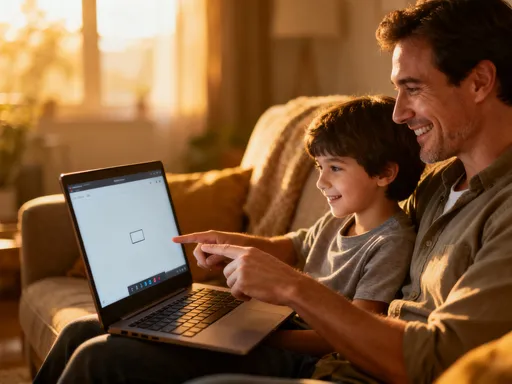
The tool opened in my browser—no install, no sign-up, no permissions beyond microphone access, which I could toggle on or off. The interface was clean: one big red button in the center that said “Record.” That’s it. I clicked it, walked through a math problem step by step, narrating as I went. When I stopped, the video was instantly saved to the cloud, and a shareable link appeared. I copied it, pasted it into a text, and sent it to my daughter: “Here’s how to do the problem. Watch it whenever you want.”
That night, she watched it twice—once before starting her homework, and once after, to check her work. She didn’t ask for help. She didn’t need me sitting next to her. And when she came to me the next morning, she said, “I got it. You made it make sense.” That was the moment I knew: this wasn’t just a screen recorder. It was a confidence builder. For her. And for me.
What made it different? It didn’t try to do everything. It did one thing—record your screen and voice—and it did it well. The audio was clear. The video quality was sharp. The file size was small enough to share instantly. And because it saved to the cloud, I didn’t have to worry about storage or compatibility. My daughter could open it on her tablet, her laptop, even her phone. No downloads. No apps. Just click and play. For the first time, I felt like technology was working for me, not against me.
How We Use It Beyond Homework—And Why It Stuck
Once I saw how much easier it made homework, I started thinking—what else could this help with? The first thing was work stuff. My husband kept asking me to explain how to submit expenses in our company’s billing system. Instead of walking him through it over the phone while he fumbled with clicks, I recorded a quick two-minute video showing each step. I sent the link. He watched it during his lunch break. Later, he texted: “Got it. Thanks. That was way easier than me calling you ten times.”
Then I used it for cooking. My sister wanted to make my famous banana bread but kept forgetting the steps. So I recorded myself walking through the recipe—measuring flour, mixing, pouring into the pan—while explaining the tips that aren’t in the written recipe. I sent her the video. She said, “Now I finally get why yours always turns out better.” It wasn’t magic. It was just seeing it done, in real time, with voice.
Even my mom started benefiting. She’s in her seventies and recently got a tablet, but she’s nervous about using it. Instead of trying to explain over the phone how to open her email or download a photo, I started sending her short video guides. “Here’s how to reply to a message,” or “This is how you zoom in on a photo.” She watches them when she’s ready, rewinds if she misses a step, and feels more in control. Last week, she video-called me and said, “I did it all by myself. I watched your video three times, and now I don’t need to call you every time.” That made me tear up. It wasn’t just about tech. It was about dignity. About independence. About love that doesn’t have to be delivered in person to be felt.
That’s when I realized this tool wasn’t just for fixing homework stress. It became a way of staying connected. A digital hug. A “I’m here for you” that doesn’t require being in the same room. It turned “I don’t get it” into “Let me show you.” And that shift—small as it sounds—changed everything.
Setting It Up Without the Stress (Even If You Hate Tech)
If you’re someone who avoids tech because it feels overwhelming, I promise—this is different. You don’t need to download anything. You don’t need to create an account. You don’t need to remember passwords or worry about storage. Here’s exactly how we do it: I open my browser—Chrome, Safari, whatever you use—and type in the website address. It loads in seconds. I click “Start Recording.” A small box asks if I want to share my microphone. I say yes. That’s it. I click the red button, and it starts.
I can choose to record my entire screen, just one window, or a specific tab. For homework, I usually pick the tab with the assignment. I talk as I go: “Okay, first you click here. Then you type your answer in this box. See how the color changes? That means it’s saved.” When I’m done, I click stop. The video processes for a few seconds. Then—boom—a link appears. I copy it, paste it into a message, email, or text, and send it.
That’s the whole process. No extra steps. No confusing menus. No waiting. And because it’s a link, anyone can open it—no matter what device they’re on. No app needed. No download. Just click and watch. I’ve taught my sister, my mom, even my husband—all of whom say they’re “not good with tech”—how to use it. And they all got it in under three minutes. That’s the kind of simplicity that actually works in real life.
What Changed in Our Days (and Nights)
The biggest change? Peace. Real, tangible peace. We don’t fight about homework anymore. My daughter doesn’t feel stuck. I don’t feel like I have to drop everything to help in the moment. If she gets stuck at 8 p.m., she knows she can watch my recording. If she has a question at 7 a.m., she can rewatch it. The pressure is gone. The urgency is gone. What’s left is learning—on her terms, in her time.
But it’s not just about less stress. It’s about more confidence. She’s started recording her own videos—explaining science projects to her classmates, showing her little brother how to do his spelling words. She feels proud. Capable. In control. And I’ve noticed something else: she asks for help less, but when she does, it’s more specific. “I get steps one and two, but step three is confusing.” That kind of clarity? That’s gold. It means she’s thinking, not just struggling.
For me, it’s given back time. Precious, irreplaceable time. I’m not spending 45 minutes every night hunched over a laptop, repeating myself. I record once, and it lasts. I can be in another room, on a call, or even out running errands—knowing she has what she needs. And when we do sit down together, it’s not about fixing mistakes. It’s about celebrating wins. “I did it!” she’ll say, and I’ll say, “I know. I saw your work.” That’s the kind of parenting I want—present, supportive, but not hovering.
Our evenings are calmer. Our connection is stronger. And for the first time in years, I feel like I’m not choosing between being a good mom and having my own life. I’m doing both—because this small tool gave me back the space to do it.
Why This Isn’t Just About Recording Screens
At its core, this isn’t about technology. It’s about presence. It’s about showing up for the people you love—even when you can’t be there in person. It’s about patience that doesn’t wear thin. Clarity that doesn’t get lost in translation. Love that shows up as a link in a text message: “Here’s how to do it. I made this for you.”
In a world that moves too fast, where we’re always rushing from one thing to the next, this simple act—recording a few minutes of your voice and screen—creates a pause. A moment of care. A chance to say, “I see you. I hear you. I’m here.” And that kind of connection? It doesn’t come from fancy gadgets or expensive apps. It comes from intention. From showing up in ways that matter.
This tool didn’t replace our relationship. It enhanced it. It didn’t make me a hands-off parent. It made me a more thoughtful one. I’m not solving every problem in real time. I’m giving her the tools to solve them herself—with my voice guiding her, even when I’m not in the room. And that, I’ve learned, is the quiet power of good technology: it doesn’t take over. It lifts up. It doesn’t complicate. It simplifies. It doesn’t distance us. It brings us closer—on our own terms, in our own time.
So if you’re in those evening trenches, if you’re tired of the homework battles, if you want to help but don’t know how—try this. Not because it’s the fanciest tool. But because it’s the one that finally made helping feel easy. Because sometimes, the best tech isn’t the one with the most features. It’s the one that helps you be more you.”